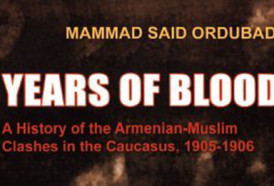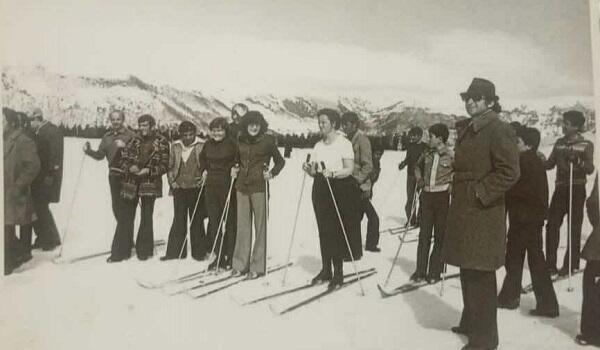
The mass deportation of Western Azerbaijanis from Armenia is not merely a migration issue, but a clear example of planned violence, ethnic cleansing, and crimes against humanity. From the early 20th century to the 1990s, the systematic killing, displacement, and genocidal acts committed against the Azerbaijani population living in the territory of Armenia have been documented through historical records.
The deportations, violence, and acts of genocide carried out against Western Azerbaijanis throughout the 20th century are the result of a deliberate and systematic policy of ethnic cleansing. Documenting these facts, presenting them to international legal institutions, and communicating them to the global public is essential for ensuring both historical justice and legal accountability. The forced displacement, persecution, and mass killings of the indigenous Azerbaijani population living in Armenia were carried out four times at different periods throughout the 20th century.
Historical Context: 1905–1920
Based on the research of Jabi Bahramov, PhD in History and Head of the Department of West Azerbaijani History at the Institute of History and Ethnology of the Azerbaijan National Academy of Sciences (ANAS), during the years 1905–1907 and 1918–1920, Armenian armed groups burned hundreds of Azerbaijani villages in Western Azerbaijan and brutally massacred tens of thousands of people. His studies indicate that these acts of violence were carried out for ideological purposes, and atrocities against the civilian population were widespread. Sources note that women and children were killed with particular cruelty, villages were destroyed, and sacred sites were desecrated.
In the Lori-Pambak, Shorayal, Zangazur districts, and the Goycha region—where the vast majority of the population consisted of Azerbaijanis—massacres were committed, and attempts were made to seize these territories by armed force. Armenian armed units systematically slaughtered Azerbaijanis living in these areas. According to research by Nazim Mustafa, PhD in History and Head of a Department at the Presidential Library, the report of the Erivan Governor Count V. Tisenhausen on the year 1905 recorded that during the disturbances that occurred in the governorate, 125 villages were destroyed within that year alone. According to Armenian author Stepan Zavaryan, 43 Muslim villages were destroyed in the Zangazur district in 1905–1906.
During the 1905–1906 massacres, 286 villages were devastated in the South Caucasus. Estimates indicate that approximately 200 of the destroyed villages and towns were Azerbaijani settlements. As a result of the Armenians' armed interventions aimed at acquiring new territories during those years, the districts of the South Caucasus became divided into two hostile fronts, with 1.3 million people turned against each other. More than 15,000 families (approximately 100,000 people) were displaced from their homes. Human casualties numbered nearly 10,000. Some Azerbaijani settlements subjected to destruction have remained in ruins since that time.
By March 1918, Armenian armed groups had devastated 32 villages in the Erivan district, 84 in the Echimadzin district, 7 in the Novo-Bayazid district, and 75 in the Surmali district—198 villages in total—and subjected approximately 135,000 Azerbaijanis in these districts to genocide.
In general, between 1905 and 1920, more than 500 Azerbaijani villages within the territory of present-day Armenia were destroyed, most of which were turned into Armenian settlements. Between 1918 and 1920, after Armenian armed groups destroyed 130 Azerbaijani-inhabited villages in the territory of present-day Armenia, these villages were left permanently in ruins. While in 1916 it was recorded that 373,582 Azerbaijanis lived in the Erivan Governorate, by November 1920, only about 10,000 Azerbaijanis were registered in Soviet Armenia. A policy of ethnic cleansing was carried out against Azerbaijanis in the territory of present-day Armenia. After the establishment of Soviet power in Armenia, only a small number of Azerbaijanis were able to return to their homes.
As a result of the atrocities committed between 1905 and 1920, 565,000 Azerbaijanis living in Armenia were either killed or forcibly displaced from their homes.
The 1948–1953 Deportation and Violence
Historian Nazim Mustafa refers to this period, the second wave of deportations, as the "period of silent terror." Despite the resistance of the Armenian government and the widespread famine and misery prevailing there, by 1922, approximately 100,000 Azerbaijanis had already returned to their native lands. According to official statistics, 26,000 Azerbaijani refugees returned to the Erivan district, 14,000 to the Novo-Bayazid district, 9,000 to the Echimadzin district, 10,000 to the Alexandropol district, 15,000 to Zangazur, 5,500 to Daralayaz, and 17,000 to the Lori-Pambak and Ijevan regions.
In 1926, the population in Armenia included 743,573 Armenians and 84,717 Azerbaijanis, while by 1939 these numbers had increased to 1,062,000 Armenians and 130,800 Azerbaijanis. Comparatively, the Armenian population grew by 42.7%, whereas the Azerbaijani population increased by 56.8%. The high growth rate of Azerbaijanis caused serious concern among Armenians. Therefore, the process of resettling Armenian families brought from the Middle East to villages inhabited by Western Azerbaijanis was initiated.
During the 1930s, nearly fifty thousand Azerbaijanis living in the regions of Vedibasar, Zangibasar, Gamarli, Daralayaz, Aghbaba, Lori-Pambak, Western Zangazur, and others were subjected to repression — many were arrested, executed, or deported with their families to the steppes of Kazakhstan. The majority of Azerbaijanis currently living in Kazakhstan are descendants of families exiled from Western Azerbaijan in the 1930s. Unable to adapt to the harsh climate and poor living conditions, a significant portion of the exiled population perished in exile.
Moreover, in 1948, more than 100,000 Azerbaijani families were deported from their native lands by the decision of the Soviet leadership. Although the deportation of 1948–1953 is recorded in history as the “1948–1953 Azerbaijani deportation,” in fact, from a legal standpoint, it was an exile. Due to harsh conditions in the railway wagons during the deportation, hundreds of people—especially children and the elderly—died en route. Their property was confiscated, and their homes were distributed to Armenians.
On December 23, 1947, the USSR Council of Ministers issued decree No. 4083 titled “On the relocation of kolkhoz workers and other Azerbaijani population from the Armenian SSR to the Kur-Araz lowland of the Azerbaijani SSR.” This decision came as a sudden and unexpected blow to the Azerbaijani people. The inclusion of the term “kolkhoz workers” in the decree was nothing more than a political manoeuvre.
On March 10, 1948, a new decree by the USSR Council of Ministers titled “On measures related to the relocation of kolkhoz workers and other Azerbaijani population to the Kur-Araz lowland of the Azerbaijani SSR” was issued, stating that it was an addition to the December 23, 1947, decree of the USSR Council of Ministers. Both decrees were signed by Stalin.
Both decrees envisaged the relocation of kolkhoz workers and other Azerbaijani inhabitants from the territory of the Armenian SSR to the Kur-Araz lowland of the Azerbaijani SSR. The first decree (dated December 23, 1947) specified that 10,000 Azerbaijanis would be relocated in 1948, 40,000 in 1949, and 50,000 in 1950 (a total of 100,000) to the Azerbaijani SSR. This decree remained in force until 1953.
In other words, from 1948 to 1953, 150,000 Azerbaijanis were relocated from the Armenian SSR to Azerbaijan. A review of both documents reveals that they were hastily prepared without consideration of any conditions.
The urgency with which the decree was prepared is more clearly reflected in its Article 11. It states: "The Council of Ministers of the Armenian SSR shall be permitted to use the buildings and residential houses vacated by the Azerbaijani population relocating to the Kur-Araz lowland of the Azerbaijani SSR for settling Armenians coming from abroad."
Research has shown that in 1948, 429 families (2,384 individuals), and between 1948 and 1950, over 1,000 households (7,000 individuals) of Azerbaijani families, under various pressures, left their properties behind in a scattered manner and sought refuge in Azerbaijan. This caused unbearable material hardships. Armenian nationalists spread various rumours and created panic among Azerbaijanis. As a result, thousands of Azerbaijani families were forced to flee not only to different regions of Azerbaijan but also to other republics of the USSR.
Thus, between 1948 and 1953, 144,654 people were forcibly displaced from their native homes in Armenia. The forced relocation of Azerbaijanis turned hundreds of villages where they lived into ruins. It was noted at the January 1975 plenum of the Armenian Communist Party Central Committee that more than 476 villages had become unused.
Alongside the deportation, the renaming of settlements, closure of educational and cultural institutions, and merging of districts were rapidly carried out. Consequently, the names of hundreds and thousands of villages and districts were Armenianized.
1987–1991: The Final Wave of Violence
1987–1991 is characterised as the stage of ethnic cleansing, marking the completion of the removal of Azerbaijanis from Armenia.
Documents and witness testimonies collected under the leadership of Aziz Alakbarli, Chairman of the Board of the Western Azerbaijan Community and Member of Parliament, show that these years were the bloodiest and most tragic period for Western Azerbaijanis. Against Azerbaijanis in the regions of Krasnoselo, Vedi, Ararat, and others in Armenia, the following serious crimes were committed:
• attacks on houses,
• burning alive,
• mass killings, and
• violence against women.
During the deportation, families were separated from one another, and thousands of people lost their lives at the border and on the way.
Based on relevant documents and witness statements, according to the list compiled in 1990 at the Azerbaijani Refugees Society, between 1987 and 1990, 216 Azerbaijanis were brutally murdered or died as a result of incidents stemming from interethnic conflict in Armenia. According to that list, 52 people died from injuries, 34 were killed by torture, 20 were shot dead, 15 were burned, 8 were hit by vehicles, 9 died in road accidents, 7 died as a result of medical malpractice, 9 died from heart attacks caused by severe emotional distress, 2 committed suicide, 1 was hanged, 2 died as a result of car bombings, 1 was electrocuted, 1 was drowned, 6 went missing, 20 disappeared from hospitals and 48 died in the mountains due to storms.
Crimes Committed on an Ideological Basis
The Chairman of the Western Azerbaijan Community, Aziz Alakbarli, notes that these events were not accidental but part of Armenia’s strategy to transform into a mono-ethnic state. The violence and massacres aimed to prevent the return of Azerbaijanis and to create collective fear. This was also a policy of erasing cultural and historical traces—cemeteries were destroyed, mosques desecrated, and archives eliminated.
Based on the crimes committed over four periods of a century—1905–1907, 1918–1920, 1948–1953, and 1987–1991—the Prosecutor General’s Office of the Republic of Azerbaijan initiated a criminal case on March 30, 2023, regarding the deportation of Western Azerbaijanis from Armenia. The Prosecutor General’s Office based this case on appeals from the Western Azerbaijan Community, the State Committee for Refugees and Internally Displaced Persons, and the State Commission on Prisoners of War, Missing Persons, and Hostages.
The criminal case is being conducted under the following articles of the Criminal Code of the Republic of Azerbaijan: Article 103—genocide; Article 107—deportation or forced displacement of the population; Article 109—persecution; and Articles 120.2.4 and 120.2.7—murder with particular cruelty.
Deputy Prosecutor General Elmar Jamalov stated that the Prosecutor’s Office is extensively collecting information jointly with the Presidential Library, the National Academy of Sciences, the State Archive Department, the Western Azerbaijan Community, and other institutions. Various historians and experts have been involved in the investigation.
According to statistical data from the criminal case, more than 250,000 Western Azerbaijanis were forcibly displaced from their ancestral lands during the period 1987–1991 alone. The investigation materials confirm the killing of 216 individuals during this period. Additionally, 6,522 persons have been recognised as victims and interrogated.
Furthermore, the Prosecutor General’s Office has supplemented the investigation by collecting documents and copies from both local and foreign archives.
This step by the Prosecutor General’s Office represents a serious effort toward the legal and international recognition of the deportation, genocide, and acts of violence against Western Azerbaijanis. It is of significant importance both for the restoration of historical justice and for ensuring future legal protection.
As a result of the hardships inflicted on the Azerbaijani people by Armenian nationalists and Dashnaks, more than 2 million Azerbaijanis became victims of Armenian vandalism and genocidal policies in the 20th century alone. The mass deportation of Azerbaijanis, the violent expulsion of peaceful civilians from their ancestral lands, the severe hardships faced by tens of thousands, the illness and deaths of hundreds and thousands of innocent people—in short, the unbearable tragedies and crimes inflicted upon our people—should be recognized as genocide and ethnic cleansing in accordance with Article 2 of the UN Human Rights Commission’s decision adopted in 1948.
These acts must be classified as crimes under the framework of the 1948 UN Genocide Convention, the European Convention on Human Rights (Articles 2 and 3), and international documents concerning crimes against humanity.
This article presents an investigation into the violence, mass killings, and murders that occurred during the mass deportation of Western Azerbaijanis from Armenia.
This article is published within the framework of the “A Story of Pain” project implemented by the “Citizen” Research and Development Public Union with the sponsorship of the State Support Agency for Non-Governmental Organisations.
More about:


-1780923278.jpg&h=190&w=280&zc=1&q=100)