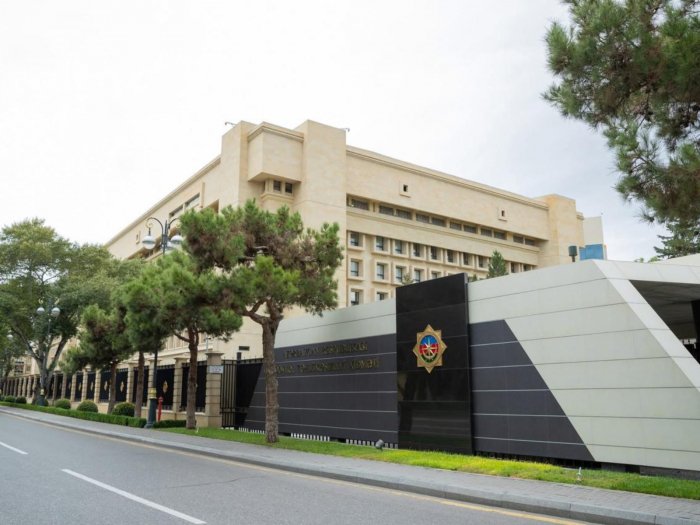
As a result of complex counter-intelligence measures, the State Security Service (DTX) has thwarted planned acts of terrorism, sabotage, and espionage organized by SEPAH (the Islamic Revolutionary Guard Corps), a special service organ of the Islamic Republic of Iran.
AzVision.az reports that the plots aimed to create public panic and damage Azerbaijan’s international reputation. Targeted strategic sites and individuals included the Baku-Tbilisi-Ceyhan (BTC) oil pipeline, the Israeli Embassy in Azerbaijan, a leader of the Mountain Jews Religious Community, and the Ashkenazi Synagogue. While three explosive devices were successfully smuggled into the country, they were neutralized before they could be transferred to their final handlers. Operational search measures were organized to identify the strategic targets and the individuals collaborating with Iranian Special Services.
The First Cell: Explosives Smuggling and C-4 Seizures
The investigation revealed that Iranian citizens Behnam Sahibali Rustamzada and Yaser Rahim Zandkian conspired with Azerbaijani citizen Tarkhan Tarlan oglu Guliyev to smuggle explosives into the country. Acting on instructions from Yaser Rahim Zandkian, a hidden container was identified near the Shikhov settlement in the Sabail district. Upon inspection, authorities discovered 7 kg 730 grams of "C-4" explosives, specifically designed for destroying large objects and concrete structures.
DTX operational footage confirmed that Tarkhan Guliyev, accompanied by Nijat Zaman oglu Agayev, arrived by car to retrieve the container and subsequently hid the explosives in the Nasimi district of Baku.
The Second Cell: Remote-Controlled Devices
Further investigations revealed another container smuggled under the direction of Hosein Savar Saber Azarundbileh, an Iranian citizen with direct links to SEPAH. This container held two remote-controlled "C-4" type explosive devices. Azerbaijani citizen Asad Tofig oglu Abdullayev retrieved the package from a secret location.
Because the DTX had prior intelligence, the storage site was under covert video surveillance. The following day, Rashad Rustamov and Asad Abdullayev were seen moving the container from the Shikhlar settlement in the Gobustan district to a hiding spot near Abdullayev’s residence. It was established that the Iranian handlers involved were engaged in both drug trafficking and direct operations for the Islamic Revolutionary Guard Corps.
Plots Against the Jewish Community and Infrastructure
The DTX identified a wider circle of SEPAH contacts planning assassinations and sabotage. Iranian citizen Sheikhzadeh Sajjad Moghadam Sati Sofi Evad offered $50,000 USD to a recruit to plant an explosive device under a bridge in the Sangachal settlement of the Garadagh district. It was also revealed that Sheikhzadeh received specific orders from SEPAH to prepare assassination plots against individuals of Jewish descent living in Azerbaijan.
The Shipyard Plot and Deadly Radius
Due to previous failures where handlers lost contact with their recruits, Iranian citizen Hafez Tavassoli initiated the delivery of a new explosive device. A device weighing 1,280 grams was discovered near the Baku Shipyard in the Garadagh district. This specific explosive had a lethal fragments radius of 250–300 meters.
Tavassoli, acting as a SEPAH coordinating agent, contacted Khadija Zakir qizi Agayeva, instructing her to hold the package for two days. After retrieving it from designated coordinates, she moved the box to a secret location in the Masazir settlement. After she confirmed that a person on a motorcycle had retrieved the package, she alerted Tavassoli. Following instructions from Sajjad Sheikhzadeh, Elvin Bahruz oglu Ahmadov then took the device and hid it near his home in the Bilajari settlement.
Assassination Attempt on a Public Figure
Hafez Tavassoli also contacted Azerbaijani citizen Narmina Ramiz qizi Shabanova to organize the assassination of a prominent public figure. Shabanova was tasked with photographing the target’s workplace and the individual themselves.
Furthermore, Shabanova received instructions from SEPAH to meet a foreign national sent from a third country to carry out the killing, arrange their hotel stay, and secure weapons and a vehicle. At this stage, Naib Agaismi oglu Ismiyev informed Shabanova that he would carry out the assassination for 80,000 AZN. Ismiyev conducted video surveillance of the target's workplace via his mobile phone to plan the execution and escape route, sending the footage to Shabanova. The group had reached an agreement to acquire firearms and other tools to finalize the assassination attempt.
Legal Action and Arrests
Through preemptive and urgent operational-investigative measures, these high-stakes crimes were prevented. The following individuals confessed to their crimes and their roles in following SEPAH’s orders:
- Tarkhan Guliyev, Nijat Agayev, Asad Abdullayev, and Rashad Rustamov were found guilty and sentenced to 6 years and 6 months of imprisonment.
- Narmina Shabanova and Naib Ismiyev have been charged under Articles 28 and 277 (Preparation for an assassination attempt against a state or public figure).
- Elvin Ahmadov was charged under Article 228.2.1 (Illegal acquisition and possession of weapons/explosives by a group).
The investigation identified Colonel Ali Asghar Bordbar Sherami, an officer of the SEPAH Intelligence Organization, as the direct organizer of these terror acts against Azerbaijan.
International arrest warrants have been issued for Iranian citizens Yaser Rahim Zandkian, Behnam Sahibali Rustamzada, Hosein Savar Saber Azarundbileh, and Sheikhzadeh Sajjad Moghadam. Complex investigative and operational measures continue to identify the full extent of the network collaborating with foreign special services.
More about:


-1780923278.jpg&h=190&w=280&zc=1&q=100)