Jeremy Gilley: “By working together we can create a more peaceful world”
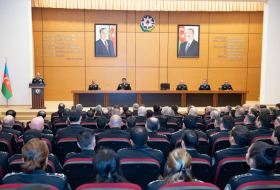
Integration of Azerbaijani Youth to Europe Organization (AGAT) held a meeting of Azerbaijani youth with the founder of UK`s "Peace One Day" organisation Jeremy Gilley on October 20, 2015. The representatives of Coordination Council of national minorities living in Azerbaijan such as Polish, Russian, Kazakh, Turkish community members, representatives of mass media and peace ambassador of AGAT the winner of Eurovision song contest Eldar Gasimov attended the meeting broadcasted live via Skype.
Nargiz Khalaf, the president of AGAT delivered the first speech greeting Jeremy Gilley and made a short video presentation on 2-year cooperation with POD.
Eldar Gasimov peace ambassador of AGAT the winner of Eurovision song contest greeted Jeremy and invited him to Baku for further cooperation. He asked J. Gilley to help Azerbaijan to find ways and solutions to live in peace.
In his turn the founder of Peace Day Jeremy Gilley expressed his satisfaction with the works done towards mutual cooperation noting AGAT’s importance for Peace One Day.
“It is real success there are so many people involved in our activity. I just watch you presentation it is amazing to see that so many people are gathering in order to make peace. We can create peace One Day joining our efforts. The world need intercultural cooperation. This is the key for salvation of mankind.
And what you’ve been doing in Azerbaijan is a great example to other societies. I would love to come to your country someday and work with you.
Then he answered questions addressed to him.
- Do you believe in establishing peace in the world one day? Is it far from realistic?
- I would like to have a peace in whole world. However, it is probably utopian dream that entire world will be in peace. Because there are many differences. I think it is about how we resolve these differences. It is ok to think differently. It is just about how we respond. It is situation where somebody thought differently to us. Therefore, I think that change in the way which humans are interacting and behaving is going to happen when we educate, inspire, empower and give tools to young people to be able to resolve the conflicts in a different way. But you cannot expect them to do that if you are not providing them the tool to be able to do so. So I think the real change that is going to occur for humanity is going to come when we do everything we can in order to invest, time, money and human resources in young people to support them, to create a peaceful and sustainable world. And that isn’t just a conversation that is a lesson, a weekly lesson, a daily lesson that they can be a crypt to create a world in which we all would like to see become a reality. So I think that, you know stopping the wars, stopping all forms of violence of course is not realistic. But can we work to make the world more peaceful and more sustainable? YES we definitely can. And in order achieve this we must invest in young people in a new way in a profound way, in a concentrated strategic way and then I think we will see the world very different.
- What would be your message to those who didn’t allow the establishment of peace in Caucasus and did a fake history fight?
-I am a person who was concerned about what was going in the world. I was frightened and confused by what is going on in our homes, what is going on in our communities, what is going on in our schools, what is going on in our places of work. I was trying to make sense of the world I live in. why is it no more peaceful?! And I approached this in a very simplistic way which say “look let’s have a day, lets come together as one, and out of that create hope and dialogue, and reconciliation, and from that we can built bridges not just one day but more. So specific example within particular countries that conversations should be lead by those who have a deep kind of understanding of the precise issue that you are talking about. And of course whenever I speak to countries around the world there issues that those countries are dealing with and they ask me how we going to overcome this issues and what you think about these issues. And what I say is this that every individual in our countries need to understand that peace is in their hands that they can make a difference in their homes in their communities and in their schools. And if we improve the quality of the relationship with their own families, then we change the community, and we change our countries. It sounds simplistic. Believe is the only way forward. We must understand that we are central to a more peaceful family, community and country. And this is my focus. This is the focus of Peace One Day. This is the focus of peace day. It is important to remember once again in relation to be specific question you’ve asked 98% or 96% ,95 % but around this number of the violence that was happen today is going to happen in our homes communities and schools. This is accurate data that only 3, 2 and 4 percent of violence that happen today were happening through terrorism and war. If you take this as a real, then you begin to understand the real war that humanity faces is the one that all around us. It is everywhere developed, underdeveloped, first world, third world it is everywhere we no different. And that is we must concentrate. Peace is in our hands. It is not over there. It is around as we must take a responsibility.
- Azerbaijan is not so far from England only 5 hours apart by plane. Nevertheless, they do not have enough information about Azerbaijan and Caucasus region. Do you think that in the near future the cooperation of POD and AGAT will overcome it?
- It is up to invidious and the organizations that are structured to deal with this issues, to take these issues on board. I am here to talk about what Azerbaijan so inspirationally has been recognizing is this day. Is the opportunity from all of us from all organizations, corporations, governments, institutions, to say look this is the day what we can work together. This is the day what we can come together. And out of that comes inspiration for everybody. And I think that we – you must do all you can to talk to groups and individuals, institutions you work with on this day let us show people that we can put side out differences and start a dialogue.
- If you questionnaire children and even experienced politicians about war, they will answer that we don’t support it. In spite of it wars continue. Why it is happening?
- I think it is deal of educating young people. I think it is deal of education. When you grow up did you have in your school a lesson like math, literature English studies that told you peace building? So you didn’t have a lesson which told you to be a peace maker, which gave you the skills, to resolve the conflicts around in your home, your community, your school. You didn’t have a lesson that told you to understand the processes of sustainability and the relationship of peace. You didn’t have it and I didn’t have it. No young people are having it. There are conversations. Of course there are conversations in many schools on these issues. What I would like to see happen and I’m sure many others did yourself is the young people of the world are given peace resources peace sustainability resources. We support them to be able to lead the way in relations to peace and sustainability. That is what I really interested in. I am really interested in you asked why these wars happening. Yes there are those wars but the most of violence 99% that the real war humanity faces is in our homes is in our communities and in our schools. Perhaps because of media we are not acknowledged them. And we need acknowledge them because if we not acknowledged we cannot play and to have an impact in the real war that we face. When we think about peace we talk about peace we immediately think about war. Why we are not thinking about real war the one that surround us. And this is very interesting think that we need talk more about. We have to try to find meaning the peace. Peace is not in the hand of government just. Of course it is the in the hand of governments but is not just in the hand of governments. But it is so-so in the hand of us. And we need to accept that otherwise nothing is going to change.
- Hello Jeremy. I represent Russian community. But I don’t have question I have request. I know that you are actor. I request you to join our Azerbaijan actor troupe.
- Yes I was an actor. That is very kind of you. If we can arrange a trip to Azerbaijan then we should bring the films putting them in the cinema on order to young people to see. So let’s work together to make such trip to happen. And thank you for the invite.
- Education problem is one of the global problems of the world. Do you think that education is playing main role in peace building process?
- Education is absolutely fundamental tool of peace. There is no question in my mind. Education is fundamental tool of resolving the issue. We have to all we can to invest in the process that supports the delivery of materials free to schools around the world. We have been working on free peace education material for many years ago and that have being used by thousands of schools. We wanted to increase the number of schools that we reached globally. And we are looking new mechanism right now that we have never done before. In order to increase the amount of delivery of such materials, that we can manifest of coming 5-10 years. We are talking about new structure to be able to do that. It is fundamentally important I think UN must be involved into process; governments must be involved into process. And we will begin to lead the process.
In order to achieve this we have to work all together. Now I would like to thank you for your time today. It was real honest to speak to the people of Azerbaijan. Wish you enjoy of 21th of September and Peace every day. Thank you very much for giving your time today.
At the ending of the meeting Nargiz Khalaf invited Jeremy to visit Azerbaijan: “We would like to see you in our country. And Azerbaijani government interested in Peace. We live in a country which of 20 percent of lands is under occupation. War is not far from us. We don’t know what can happen tomorrow. That is why it is very important for us to meet you and we invite you to our country. Thank you so much”.
Jeremy Gilley to visit Azerbaijan - INTERVIEW
27 October 2015
Read: 2626
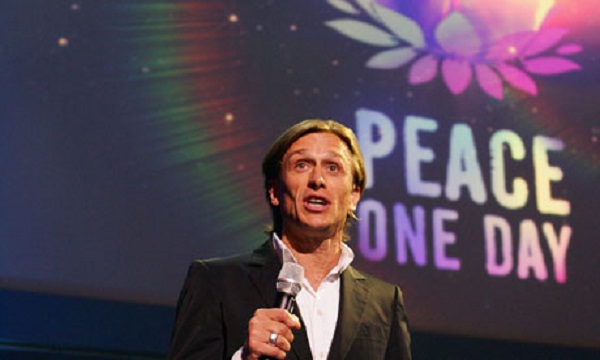
The founder of "Peace One Day" organisation Jeremy Gilley met with Azerbaijani youth
-1780923278.jpg&h=190&w=280&zc=1&q=100)