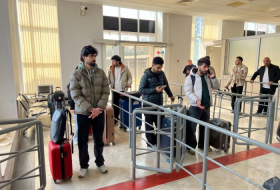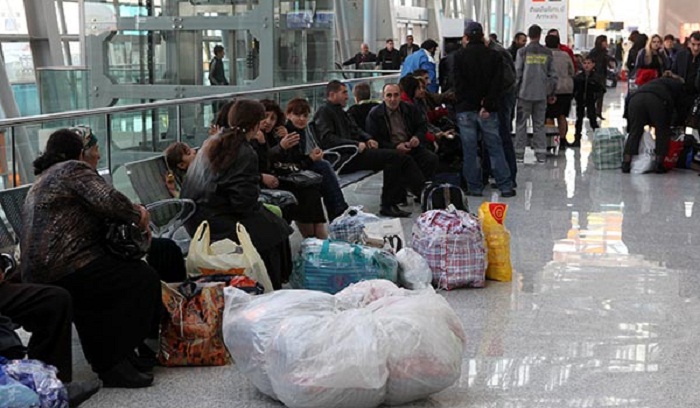
‘Brain drain’ and family emigration, a more recent phenomenon, acutely threaten the country’s demographic prospects. In past decades, people would leave Armenia to work in other countries.
This trend is getting a large-scale. In more recent years, however, people have started to emigrate with their families. Since declaring its independence, Armenia has largely been helpless in tackling its political, economic and social grievances.
According to the UN’s 2015 World Population Prospects, Armenia of today with the population of 3.018 million people would see a steady decline in numbers – 2.992 million in 2030, 2.729 million in 2050 and 1.700 million in 21001. Based on information released by Karine Kuyumchuyan of the Census Department of the National Statistics Service of Armenia, the natural population growth in the country stood at 4091 people in the first quarter of 2015 – 8.6 percent decline from the year before (4447). During the same period, 18719 new babies were born which is 2.8 percent less than in 2014 (19249). Situation is similar in terms of marriages, with 10.3 percent drop – 8582 in the first quarter of 2015 versus 9563 in 20142.
Jochovurd newspaper claimed that judging by the information provided by the National Statistics Service, 1.5 million people left Armenia between 1992 and 20143.
By 1 January 2016, Armenia’s population shrank by 12 thousand people compared to the previous year. Furthermore, the country’s population decreased by 35.9 people in the last five years, while total number since independence stands at 634.7 thousand. Urban population saw a decline of 5.5 thousand (1.9074 million) with Yerevan, Lori and Shirak account for the biggest losses. Rural population decreased by 6.5 thousand (1.0912 million). Although the death rate rose by 0.4 percent, the natural population growth stood at 13.980 people by the end of 20154.
Below are estimated population dynamics figures for Armenia in 2016:
Birth rate: 105 children/day (4.37 children/hour)
Death rate: 69 people/day (2.87 people/hour)
Migration rate: 31 people/day (1.28 people/hour)
Age structure:
0-15 years: 523,200 people (male 285,125; female 243,335)
14-64 years: 2,153,966 people (male 1,009,236; female 1,144,730)
64 years and over: 299,075 people (male 113,288; female 185,887)5
On the average, some 200 thousand Armenian citizens travel to Russia for seasonal employment.
According to the survey by depop.am results, respondents’ willingness to emigrate increases in parallel with their salary levels, and 34 percent said they wanted to emigrate.
In 2009, Russia introduced its ‘Compatriots’ immigration program aimed at bringing immigrants to the Russian North. The program offered a grant, job and privileged conditions to buy property, along with the prospect of Russian citizenship. According to the data from the Armenian Migration Service, a total of 26,000 Armenians applied to the program during the past four years, of whom 1,500 gave up their Armenian citizenship and moved. The overwhelming majority of these applications was filed for emigration with families, and included skilled young people of working age (which was one of the program’s requirements). The demand for emigration through this program was so high that the Armenian government urged the Russian government to close the program office in Armenia. Armenian Prime Minister Tigran Sargsyan said “the program that effectively encourages outward migration is unacceptable for Armenia.” The program was suspended in Armenia in 2013. Radio Liberty Armenia reported that “the term of the immigration program agreement with Armenia finished on April 1, and the agreement was not renewed.”
The dramatic increase in emigration trends has caused concern not just within the Armenian government but among international organizations as well. In 2013, for instance, the European Union Delegation and UNICEF, in cooperation with the Ministries of Labor and Social Issues and Territorial Administration of Armenia, launched a three-year project aimed at mitigating the social consequences of labor migration for families and communities in Armenia.
Persistent economic and social problems and unresolved Nagorno Karabakh problem are among the most serious problems causing population decline. Failure to address those grievances would likely to strengthen trend of decline. Although Armenia attempts to tackle the problem of dwindling population by resettling the ethnic Armenians fleeing Syria, Lebanon, Iraq and other countries due to the ongoing conflicts in the Near and Middle East, the efforts have so far been futile. These wealthy Armenians leaving the conflict zones chose Europe and the U.S. over Armenia. Those who end up in Armenia are the economically vulnerable ones and thus, they are nothing but an added social and economic burden for the Armenian government.
AzVision.az
More about:


-1780923278.jpg&h=190&w=280&zc=1&q=100)