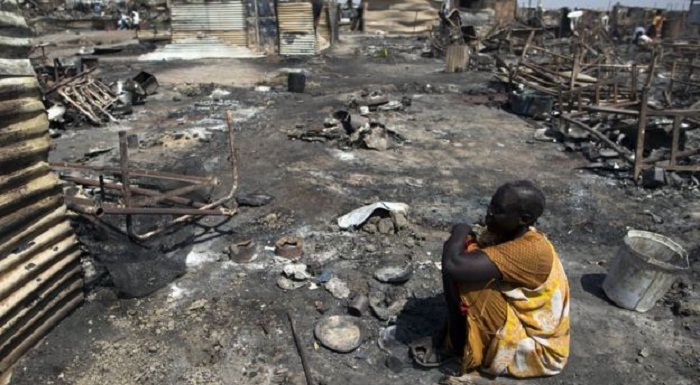
The army operated a "scorched earth" policy to deliberately target civilians for killing and rape, which amounted to war crimes, the UN said.
The government denies its army targeted civilians but says it is investigating.
According to the UN report, militias operated under a "do what you can and take what you can" agreement that allowed them to rape and abduct women and girls as a form of payment.
They also raided cattle and stole personal property, it added.
`Killed for looking`
The UN said government forces and allied militias had gang-raped girls and cut civilians to pieces. It also accused opposition fighters of committing human rights abuses.
President Salva Kiir`s spokesman, Ateng Wek Ateng, told the BBC there were no militias fighting on the government side.
The investigators had relied on anti-government elements as South Sudanese soldiers only fought people in uniforms, not civilians, Mr Ateng told the BBC`s Focus on Africa radio programme.
While the government disputed the report, he added, the allegations it contained were "too serious to ignore" and the government would take appropriate action.
In a separate report, Amnesty International said more than 60 men and boys had been suffocated in a shipping container by government forces.
Researchers from the UK-based campaign group said bodies of those suffocated had been dumped in a field after they were killed last October in Leer Town, Unity State.
A South Sudanese woman uses a satellite phone provided by International Committee of the Red Cross on 3 February 2016 to call her lost relatives, who fled the village in October 2015Image copyrightGetty Images
"Dozens of people suffered a slow and agonising death at the hands of government forces that should have been protecting them," said Lama Fakih from Amnesty.
"These unlawful killings must be investigated."
The civil conflict erupted in December 2013 after Mr Kiir accused his sacked deputy, Riek Machar, of plotting a coup.
Mr Machar denied the allegation but then formed a rebel army to fight the government.
Tens of thousands have died and more than two million have been displaced since then.
Amid a threat of sanctions from the UN, the two sides signed a peace deal in August last year but are yet to form a transitional government of national unity.
More about:

-1780923278.jpg&h=190&w=280&zc=1&q=100)