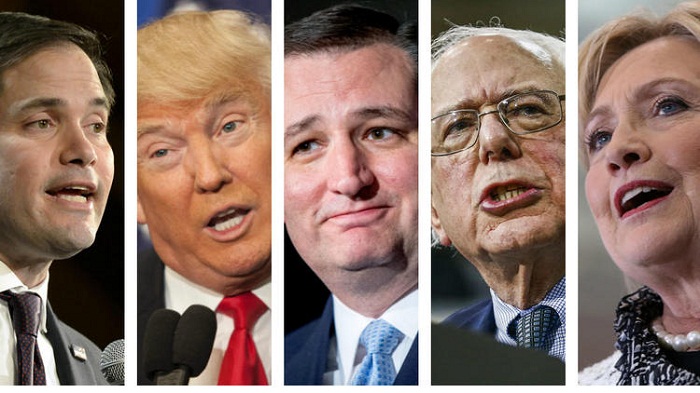
So where do the candidates actually stand?
Israel / Palestine
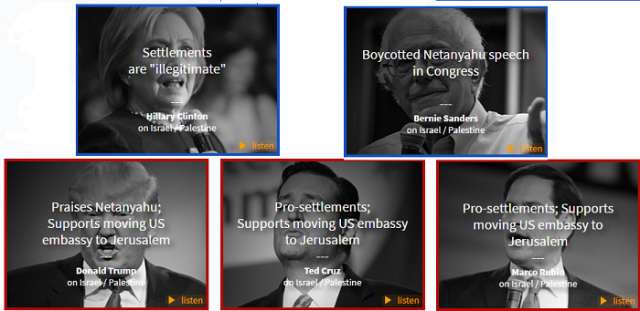
The United States has staunchly supported Israel for decades.America gives the country $3bn in aid each year.
While Barack Obama’s administration has stepped up rhetoric promoting a two-state solution and bashing settlement expansion, there have been no tangible changes in the relationship as far as money or diplomatic support is concerned.
ISIL
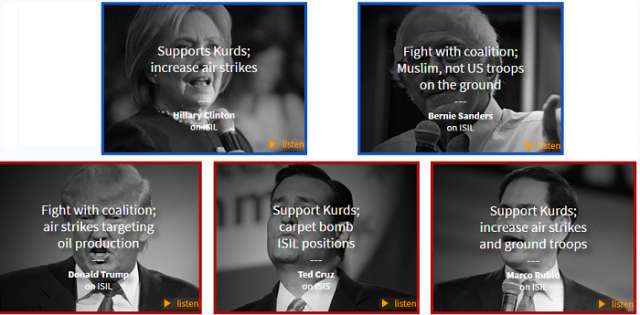
The US government was caught off guard by the rapid advance of ISIL in recruiting and taking territory.
The Obama administration has relied on a coalition of Western and Arab nations to retaliate with air strikes.
The US sent special forces to Iraq as advisers to the Iraqi army and is arming various armed groups on the ground in Iraq and Syria.
There is pressure at home to defeat ISIL, especially after last year’s attacks in Paris.
Refugees
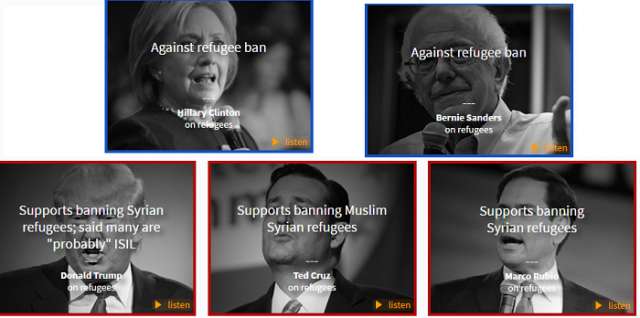
Admitting Syrian refugees into the United States became a hot-button issue after it emerged one of the attackers in Paris entered the country under the guise of a refugee.
Many Republican governors, Congress members and presidential candidates proposed temporary bans on admitting Syrian refugees into the US. President Obama blasted such proposals as ‘un-American’ and ‘offensive’.
China
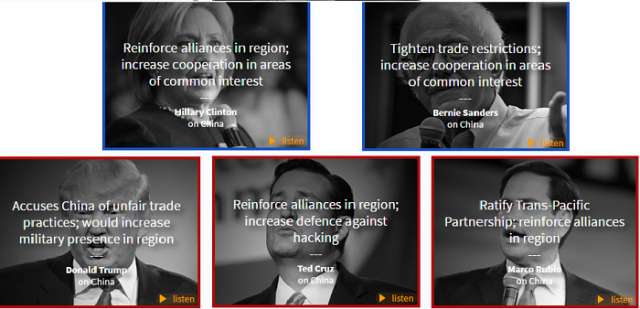
The US and China have a tumultuous relationship. The US frequently accuses China of manipulating its currency for its own gain and hacking US companies and government agencies.
The Obama administration has employed a dual approach of cooperating on shared interests, such as energy and climate change, while pushing back against China on problems such as hacking and Taiwan.
Iran
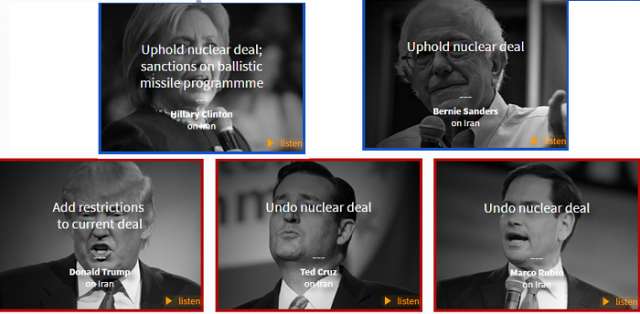
Iran’s growing influence in the Middle East is a major concern for the Obama administration.
While ties with the Islamic Republic thawed with the passing of the nuclear deal, Washington is still concerned about Iran’s roles in Syria, Yemen, Lebanon and Gaza.
There are hopes the lines of communication created by the nuclear deal will lead to progress on these issues.
Russia
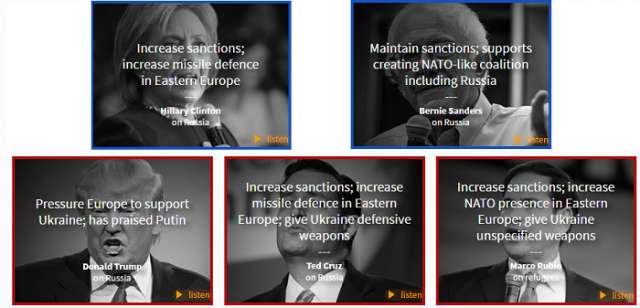
The US has been repeatedly frustrated by Russia’s role in conflicts across the Middle East and Eastern Europe.
Russian and US interests are coming to a head in Syria, Iraq, Yemen and Ukraine.
The Obama administration has tried to take a tough stance towards President Putin, leading the effort to kick Russia out of the G8, but has failed to deter it from becoming more deeply involved in these conflicts.
AzVision.az

-1780923278.jpg&h=190&w=280&zc=1&q=100)