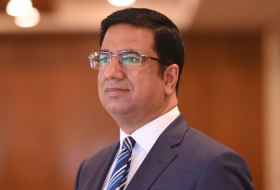
The Iranian parliament`s National Security and Foreign Policy Commission Javad Jahangirzadeh told Trend that the involvement of Russia and Iran in talks for putting an end to the Karabakh conflict may lead to reducing the destructive role of some trans-regional countries.
He further added that the regional countries contribution to reduce the tensions would be appreciated.
On the night of April 2, 2016, all the frontier positions of Azerbaijan were subjected to heavy fire from the Armenian side, which used large-caliber weapons, mortars and grenade launchers. The armed clashes resulted in deaths and injuries among the Azerbaijani population. Azerbaijan responded with a counter-attack, which led to liberation of several strategic heights and
settlements.
Military operations were stopped on the line of contact between Azerbaijani and Armenian armies on Apr. 5 at 12:00 (UTC/GMT + 4 hours) with the consent of the sides, Azerbaijan`s Defense Ministry earlier said. Ignoring the agreement, the Armenian side again started violating the ceasefire.
A meeting of the Azerbaijani, Russian and Iranian foreign ministers Elmar Mammadyarov, Sergey Lavrov and Mohammad Javad Zarif took place earlier today.
The sides exchanged views on issues of mutual interest in regional cooperation, in particular issues of bilateral and trilateral projects` implementation, as well as the transport corridor `North-South`, regional security issues, including the Armenian-Azerbaijani Nagorno-Karabakh
conflict.
Speaking to reporters on the sidelines of the meetings in Baku, Iranian Foreign Minister Javad Zarif said he was happy that military confrontations in Karabakh have stopped.
Iran says solving Karabakh issue may reduce destructive role of trans-regional countries
07 April 2016
Read: 1278
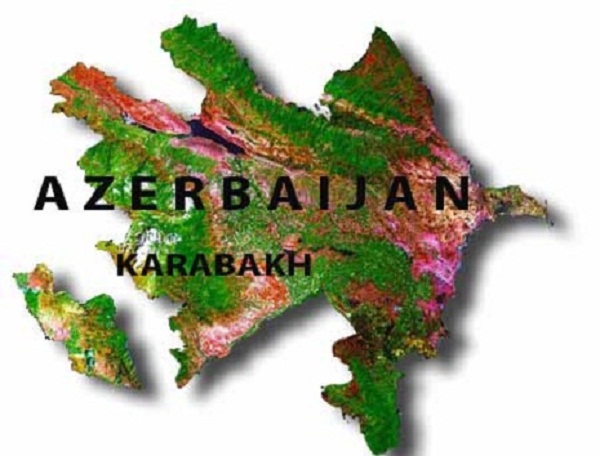
In the wake of recent escalation of tensions in Nagorno-Karabakh, an Iranian parliament member has described the trilateral meeting of foreign ministers of Iran Azerbaijan and Russia held in Baku April 7 as "significant talks".

-1780923278.jpg&h=190&w=280&zc=1&q=100)