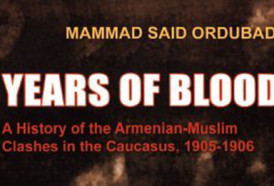
The continuation of the Nagorno-Karabakh conflict for 25 years is a big tragedy and still the sides are not able to make peace. For me, it is important to focus the peaceful solution of the conflict, the British Ambassador to Azerbaijan, Irfan Siddiq told in his interview to APA.
Q. Your diplomatic mission in Azerbaijan is about to expire. What are your impressions of the country? And how did your stay here affect these impressions?
A. I have very positive impression of Azerbaijan after my three years here. I think Azerbaijan is a fantastic, dynamic country with many talented people. I am confident Azerbaijan will continue to have a positive future with greater development and greater success. I think maybe, in the past, Azerbaijan is not known enough in the world. But over the last few years, Azerbaijan has become more well-known around the world. We, as an embassy here, try to play a role in the promotion of Azerbaijan in the UK. I think this process is succeeding.
Q. What did you like most in Azerbaijan? What will you be missing more?
A. First of all, I am a big fan of Azerbaijani cuisine. So I will miss Azerbaijani food like – qutab, basdrima, pilaf when I go back to the UK. I will also miss the weather here. Also, it is quite windy here. I like windy weather. But what I miss the most is actually the people of Azerbaijan. To my mind, Azerbaijan has many talented, educated and smart people. Such people also work in our embassy here. I will also miss my colleagues.
Q. Azerbaijan and the UK enjoy very good bilateral relations. What is needed to develop these relations further?
A. As you say relations between the two countries stand at a high level. We have strong relations in the field of politics, trade, energy, understanding of people and education. I think the UK can do more in the development of commercial relationship which is very heavily based on energy sector and energy companies. And I think what we need to do more is to get British companies working in different areas not just in energy, but also in the fields of tourism, IT, finance to be more active in Azerbaijan. I think this will help Azerbaijan’s development. In my opinion, Azerbaijan can do a lot in the sphere of economic reforms. If Azerbaijan can conduct serious reforms and be more open to different ideas and different ways of working, it will succeed. So indeed, there are enough opportunities to improve relations between the two countries.
Q. As you know, we are in a very sensitive period as to the Nagorno-Karabakh conflict. As a diplomat, who has worked in Azerbaijan, what do you think can be done to settle the Nagorno-Karabakh conflict?
First of all, I would like to extend my condolences to everybody affected by the recent violence on the line of contact between Armenian and Azerbaijani troops. It is huge tragedy that the Nagorno-Karabakh conflict that started 25 years ago remains unresolved, and we still don’t have peace. I consider it necessary to focus on a peaceful solution to the conflict. I know some people in Azerbaijan were happy of the recent clashed. Because Azerbaijan returned some territories back. But I think the lost of life is a tragedy and this is not way to solve the conflict. People have to choose peace. Considering Armenia’s unwillingness to come back to the peace talks, I think this is very much linked which the clashes that happened in the last few weeks. In December 2015, I visited Armenia. I met with my colleague and some Armenian officials there. It was very clear to me that the military conflict is continuing, and the rhetoric from Azerbaijan make them be more defensive and more keen to hold on the situation rather than be open to changes. I think there are two things that we need to focus on to try to change the situation. First of all, we need to focus very much on what security arrangements will be taken following the peaceful settlement. Because when you speak to the Armenians, you tell them that peace can be achieved only after liberation of Azerbaijan’s lands. What’s the first the Armenians say that after returning the lands, they will closer to the Azerbaijani people and it will be easy for the Azerbaijani to attack them. The Armenians should be convinced that Azerbaijan has no interest in attacking them after the liberation of its lands. The Armenians have to be confident that giving the Azerbaijani lands back will not make them less secure, because civilians are killed every day, and we should try to explain that the new situation to be available following the return of Azerbaijan’s lands will prevent loss of life, and people will be safer.
Secondly, we need to talk more about the benefits to both sides from peace, not just in terms of security but in terms of prosperity and regional cooperation. This also includes transport and communication links that will make the life of the Azerbaijani and Armenian people better, safer and more prosperous. Because, at present, more of them focus on negative things, instead of speaking about positive opportunities.
Q. You have been to various parts of Azerbaijan. What do you think of Azerbaijan’s tourism potential? What does Azerbaijan have to grab the attention of British tourists? And what do you think our country should do to attract tourists from around the globe?
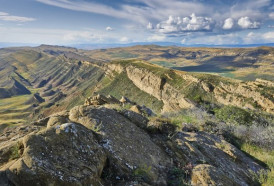
A. I have been fortuned enough to travel around Azerbaijan and be in many regions. I have been to Nakhchivan, Ganja, Guba, Sheki, Gabala, Shamakhi, Lankaran, Lerik and Astara. What’s striking is that Azerbaijan is a very much beautiful country. It is not a big country but has huge natural beauty. Azerbaijan has a lot of biodiversity from the Caucasus Mountains and forests in Lerik. Azerbaijan has a great tourism potential. But I think there is a need to develop marketing and infrastructure to attract tourists, because for British people six-hour flight is quite far away and visa fee is not cheap. Now, it is not so expensive after the devaluation of manat’s rate, but these places are not the most attractive for Britons compared to others. I think more need to be done to make Azerbaijan more attractive and more accessible. I hope I will come back to Azerbaijan. I have many friends here and many good memories.
Q. As a country discussing to quit the European Union, what does the UK think of relations between Eastern Partnership countries and the EU? Do you think the EU has to sign an agreement on strategic partnership with Azerbaijan?
A. First of all, I would like to note that the UK has not decided to leave the EU. A referendum will be held in this regard. But the British government supports staying in the EU, because it is better for the country’s international relations and the prosperity and security of the British people. So I hope that in the referendum to be held on June 23, the British people will vote to stay in the EU, because it will make the country stronger.
As for Azerbaijan-EU relations, the EU has a strong desire to build good relations of cooperation with all countries neighboring it. Azerbaijan is part of the Eastern partnership in the framework of the European Neighborhood Policy. The EU has to understand that the EAP countries are not the same. There are 6 countries and all are very different. So, the partnership agreement with these countries should be the same.
Azerbaijan’s proposal of a strategic partnership agreement is welcomed by the EU. I think we are very happy to work on this agreement. Discussions are underway to determine the format of the agreement. I think it will good for the EU to have a clear basis of understanding and cooperation with Azerbaijan. Also, it will good for Azerbaijan to have cooperation with the EU. This agreement will allow the EU to render technical, legal, financial support to Azerbaijan and contribute to this country’s development. And Azerbaijan and the EU should sign this agreement when it is possible.
Q. The UK is one of the countries supporting international projected implemented by Azerbaijan. What do you think of the prospects of these projects including railway projects?
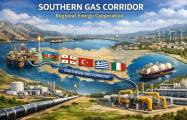
A. As you said, the UK is a big supporter of the major projects (Southern Gas Corridor (SGC), Shahdeniz 2, TANAP, TAP) that Azerbaijan is leading. The UK has been represented in the ministerial meeting of the SGC Advisory Council. BP is also working very closely on this. The British government supports BP’s effort strongly.
With regard to transport projects, these are win-win for everybody. If Azerbaijan is able to complete with Georgia and Turkey the Baku-Tbilisi-Kars railway and also with Russia and Iran the North-South railway, this will be beneficial to everybody and open up huge opportunities for the development of trade, movement of people and breaking down barriers. The UK welcomes Azerbaijan’s leadership in these areas.
Q. The UK is one of the main trade partners of Azerbaijan. BP, the biggest energy company in Azerbaijan, is a British company. Do you think the fall in oil price might affect these relations in any way?
A. I don’t think so because a lot of our activity in Azerbaijan is linked with big investment projects that are going on. Azerbaijan, the UK and BP are committed to implementing the projects of Azeri-Chirag-Gunashli, Southern Gas Corridor and Shahdeniz 2. So I don’t think the changes in oil prices will have impact on the commitment to these projects, as well as our commitment to economic partnership with Azerbaijan. Of course, the drop in oil prices will cause some changes. But the strategic commitment to working with Azerbaijan on these projects is unchanged. I think we will have no differences.
Q. Azerbaijanis show great interest in British universities. During your stay here, was there any upward trend in the number of Azerbaijanis going to British universities? What future steps will be taken for more students to benefit from it?
A. I came to Azerbaijan three years ago. I think in 2014 2015 there was a big increase in the number of Azerbaijani students in the UK. But in 2015-2016, there has been a little drop which is due to the economic difficulties in Azerbaijan. Unfortunately, studying in the UK is not free. It is a little bit hard to pay now. But what was very clear to me is that the interest from British universities in attracting Azerbaijan students is increasing every year. Every year in Azerbaijan, we are holding two major education fairs where British universities and colleges are invited to speak to students, hold open days and encourage Azerbaijani youth to study in the UK. I’m confident that the number of Azerbaijanis studying in the UK will increase after the economic situation improves.
UK supports liberation of Armenian-occupied territories of Azerbaijan
04 May 2016
Read: 1427

-1780923278.jpg&h=190&w=280&zc=1&q=100)