The Twin Otter aircraft made a journey of thousands of miles through 24-hour winter darkness and in temperatures of -60C (-76F) to reach two people needing medical attention.
They are working at the Amundsen-Scott research station.
They may both be flown to a British base 2,400km (1,500 miles) away in the Antarctic.
There are fewer than 50 people at the Amundsen-Scott research station, which is run by the US National Science Foundation (NSF).
It has a doctor and a physician`s assistant.
Two Twin Otter planes were involved in the rescue. One stayed at the British base as back-up, while one continued on the nine-hour journey to the South Pole.
"It went all according to plan," said Peter West from the NSF.
He did not disclose the identity or the medical conditions of the patients, who are working for the US company Lockheed Martin, which provides logistical services to the base.
It is not clear whether both will have to be flown out
Hundreds of science researchers at the South Pole are cut off from the world for the entire six-month winter every year and it is rare for patients to be airlifted.
The first medical evacuation from the station was in 1999, for a doctor who had been diagnosed with an aggressive form of breast cancer. Jerri Nielsen was the only medical professional on site and administered her own chemotherapy for months before the Sun rose again and she could be airlifted.
The first base at the site of the current Amundsen-Scott station was built in 1957. It is used for scientific research and features a powerful space telescope.
Plane lands for South Pole Amundsen-Scott base rescue
23 June 2016
Read: 1491
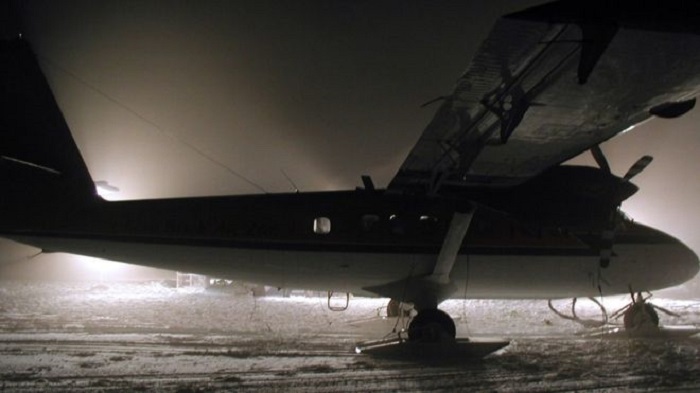
A small Canadian plane with skis has reached the South Pole on a daring medical rescue mission.


-1780923278.jpg&h=190&w=280&zc=1&q=100)