The delegation made this statement at a session of the OSCE Permanent Council in Vienna in response to President of the International Committee of the Red Cross (ICRC) Peter Maurer’s focus on the conflict due to lack of its resolution and continued occupation of Azerbaijani territories, the Permanent Mission of Azerbaijan to the OSCE told.
“We attach great importance to cooperation with ICRC and highly value the noble humanitarian mission of the ICRC with regard to alleviating dire humanitarian consequences of the conflict,” said the statement.
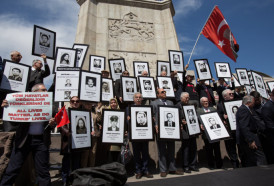
“We call on Armenia to constructively engage on clarifying whereabouts of those missing,” said the statement. “The Nagorno-Karabakh conflict led to the deaths and wounding of thousands of people, hundreds of thousands of people were forced to leave their homes, thousands of people are reported missing in connection with the conflict, and one fifth of Azerbaijan’s territory is still under occupation.”
“The conflict was accompanied by the notorious practice of ethnic cleansing and other flagrant violations of the peremptory norms of international law,” Azerbaijani Delegation said in the statement.
Promoting and strengthening compliance with international humanitarian law, especially Armenia’s compliance with international humanitarian law as an occupying power, is a key component of ICRC’s declared mission, said the statement.
“We expect that ICRC will ensure that the fundamental norms of international humanitarian law, laid down in the Hague Regulations (1907), the Geneva Convention IV and Additional Protocol I are duly respected and adhered to by Armenia and its armed forces,” the statement noted.
The conflict between the two South Caucasus countries began in 1988 when Armenia made territorial claims against Azerbaijan. As a result of the ensuing war, in 1992 Armenian armed forces occupied 20 percent of Azerbaijan, including the Nagorno-Karabakh region and seven surrounding districts. The 1994 ceasefire agreement was followed by peace negotiations.
Armenia has not yet implemented four UN Security Council resolutions on withdrawal of its armed forces from the Nagorno-Karabakh and the surrounding districts.
Humanitarian issues shouldn’t be a political tool - Azerbaijan
29 October 2016
Read: 1341
Humanitarian issues, such as the issue of missing persons, should not be treated as a political tool or a bargaining chip, and, consequently, should not depend on the political settlement of the Nagorno-Karabakh conflict, the Azerbaijani delegation to the OSCE said.

-1780923278.jpg&h=190&w=280&zc=1&q=100)